

The Ingredient
Library
Every ingredient, chosen with intention. Every source, traceable. Every claim, supported by evidence.
At Gressa, we hold the conviction that exceptional results begin with exceptional ingredients — sourced through a carefully selected network of suppliers working directly with farms around the world. Every material is meticulously chosen for its nutrient density and therapeutic properties.
Our approach draws from nature's ancient pharmacopoeia — medicinal herbs, aromatic resins, mineral salts, healing clays — elevated by the precision of modern cosmetic science to deliver maximum stability, safety, and efficacy.
No compromise in quality. No ingredient without purpose.Harvested with integrity from farms we know by name. Supply chains that begin with a handshake, not a catalog.
Every botanical selected at the height of its active compound concentration. Timing is not incidental — it is the standard.
Ancient plant intelligence, stabilized and delivered by contemporary formulation science. Neither alone is sufficient.
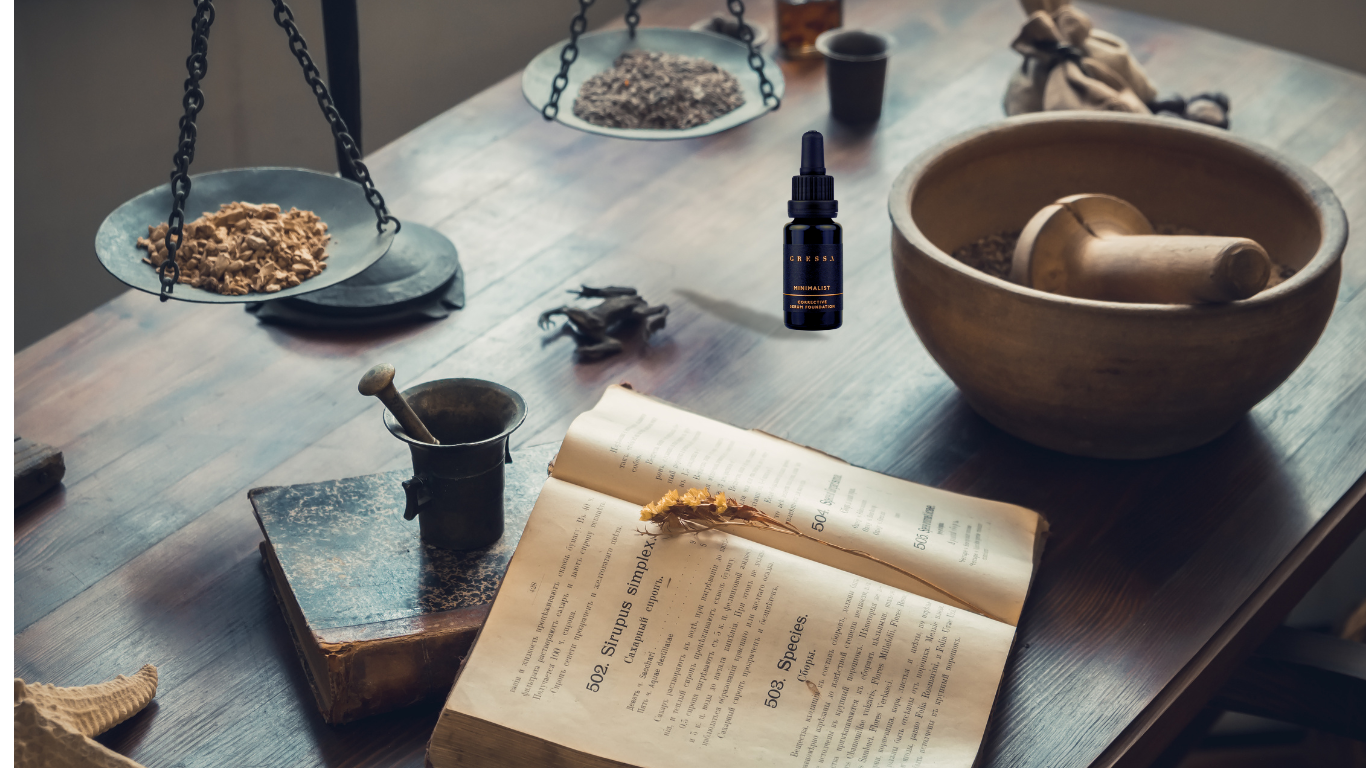
 Selected botanicals from the Gressa materia medica
The Full Materia Medica
Aloe barbadensis
Aloe Vera
Calms inflammation, accelerates wound healing, and delivers moisture-binding mucopolysaccharides to the skin surface.
Botanical
Humectant
A hydrating botanical juice that calms inflammation, accelerates wound healing, and delivers mucopolysaccharides to the skin surface. Clinical studies confirm efficacy in reducing erythema and improving barrier function in compromised skin. Used in CREAM No. 1 as a primary aqueous phase component.
Vitamin C
Ascorbic Acid
Pure vitamin C. Cofactor for collagen prolyl hydroxylase — the enzyme required for stable collagen cross-linking.
Active
Brightening
Pure vitamin C used for its refining and brightening action. Cofactor for collagen prolyl hydroxylase — the enzyme required for stable collagen cross-linking. In dry and honey-based formats it remains stable and energizes the skin without the instability issues of aqueous vitamin C formulas.
Vegetable-Derived Glycerin Classic humectant drawing atmospheric moisture to the skin surface by osmotic action. Softens texture and enhances co-applied actives. Humectant
A classic humectant that draws atmospheric moisture to the skin surface by osmotic action. Softens texture, enhances the performance of co-applied actives, and supports natural moisturizing factor production. Derived from plant sources in all Gressa formulas.
Apis mellifera · Certified Organic
Honey / Mel
Enzymatic exfoliation, humectancy, and antimicrobial activity simultaneously. Active base of the Renewing Polish.
Enzymatic
Active
Organic honey in the Renewing Polish is not a texture agent — it is the pharmacologically active base. Glucose oxidase continuously generates low-level hydrogen peroxide in situ on the skin surface, providing antimicrobial effect against C. acnes and S. aureus. This is the same mechanism validated in clinical wound-healing trials for medical honey dressings.
Gressa Standard — Certified organic. Provides enzymatic, humectant, and antimicrobial activity simultaneously in one ingredient.
Raphanus sativus Ferment
Leuconostoc / Radish Root Ferment
Natural probiotic preservative from radish root fermentation. The clean alternative to parabens and phenoxyethanol.
Probiotic
Preservative
Created through the fermentation of radish root by Leuconostoc bacteria. Provides broad-spectrum antimicrobial protection equivalent to conventional preservatives while imparting mild hydration. Selected because it preserves without the skin disruption associated with synthetic preservative systems.
Oryza sativa Ferment Filtrate
Rice Ferment Filtrate
Traditional East Asian brightening active. Fermentation enhances bioavailability of amino acids, organic acids, and minerals.
Ferment
Active
Fermented rice filtrate used in East Asian beauty traditions for centuries. The fermentation process breaks down rice starches and proteins into bioavailable amino acids, organic acids, vitamins, and minerals. Brightening, smoothing, and skin-conditioning with a long history of clinical use.
Hyaluronic Acid
Sodium Hyaluronate
Retains up to 1,000 times its weight in water. Immediate plumping; low molecular weight forms hydrate at the epidermal level.
Humectant
Active
The sodium salt form of hyaluronic acid — more stable and better penetrating than free hyaluronic acid in topical formulas. Capable of holding up to 1,000 times its weight in water. Low molecular weight forms (under 50kDa) penetrate the stratum corneum to hydrate at the epidermal level, not just the surface.
Coconut-Derived
Sodium Cocoyl Glutamate
Mild amino-acid-based surfactant from coconut. Soft foam; maintains skin's natural pH and lipid integrity during cleansing.
Gentle
Surfactant
Derived from coconut fatty acids and glutamic acid. One of the gentlest surfactants available — produces a soft foam with a skin-compatible pH of 5.5-6.5. Selected specifically because it cleanses without disrupting the acid mantle or stripping the lipid barrier.
Grape-Derived · OrganicAlcoholNatural preservative and penetration enhancer derived from organic grapes. Contributes clarity and longevity to botanical infusions.Natural
Preservative
Used in low concentrations as a natural preservative and penetration enhancer. Derived from organic grapes, it contributes both clarity and longevity to botanical infusions without synthetic preservative systems. At cosmetic concentrations it is non-drying and does not disrupt barrier function.
Alpha-Hydroxy AcidLactic AcidGentle AHA from fermented substrates. Loosens desmosomal bonds between corneocytes — surface renewal without photosensitization.AHA
Exfoliant
Gentle alpha-hydroxy acid found naturally in fermented substrates. Refines uneven texture by loosening desmosomal bonds between corneocytes, allowing natural shedding of dead skin cells. Unlike stronger synthetic AHAs, lactic acid does not cause photosensitization at cosmetic concentrations, and its larger molecular size means slower, gentler penetration.
Stable Vitamin C EsterMagnesium Ascorbyl PhosphateStable, water-soluble vitamin C ester. Enzymatically cleaved to active vitamin C at the skin surface. Antioxidant, brightening, collagen-stimulating.Vitamin C
Stable
A stable, water-soluble form of vitamin C that outperforms ascorbic acid in aqueous formulas due to its resistance to oxidation. Enzymatically cleaved to active vitamin C at the skin surface, delivering all the benefits of ascorbic acid — collagen stimulation, melanogenesis inhibition, antioxidant protection — without the instability that causes ascorbic acid to degrade in water-based formulas.
Pro-Vitamin B5PanthenolConverted to pantothenic acid in skin. Moisture-binding and barrier-regenerating via keratinocyte stimulation. Leaves skin pliant and calm.B5
Humectant
Provitamin B5, converted to pantothenic acid in the skin. A powerful moisture-binding humectant that also supports barrier regeneration by stimulating keratinocyte proliferation and differentiation. Used in treatment formulas for its ability to leave skin pliant, calm, and comfortable — particularly effective on sensitized or compromised skin.
Xanthomonas campestris FermentXanthan GumFermentation-derived polysaccharide. Stability and velvety viscosity to gels and emulsions without synthetic polymers. Mild humectant.Ferment
Gum
A fermentation-derived polysaccharide produced by Xanthomonas campestris bacteria. Provides stability, viscosity, and a velvety texture to gels and emulsions without synthetic polymers or petrochemical thickeners. Also functions as a mild humectant due to its polysaccharide structure.
Saccharomyces Ferment FiltrateYeast Ferment FiltrateAmino acids, peptides, B vitamins, and beta-glucan from Saccharomyces fermentation. Enhanced bioavailability and skin conditioning.Ferment
Active
Saccharomyces ferment filtrate rich in bio-actives including amino acids, peptides, vitamins B1, B2, B6, beta-glucan, and natural humectants. The fermentation process concentrates these components and enhances their bioavailability — the cell walls of the yeast are broken down, releasing intracellular actives that would otherwise be inaccessible. Used in treatment formulas for its conditioning and anti-aging properties.
Argania spinosa · Cold-Pressed
Argan Oil
Cold-pressed from Moroccan argan kernels. Rare schottenol phytosterols. Deep emolliency with exceptional oxidative stability.
Botanical
Oil
Cold-pressed from the kernels of the Moroccan argan tree. Rich in oleic acid, linoleic acid, and rare schottenol and spinasterol phytosterols found in few other plant oils. One of the most oxidatively stable botanical oils due to its high tocopherol content — resists rancidity without synthetic antioxidants.
Brassica oleracea · Cold-Pressed
Broccoli Seed Oil
Gressa's hallmark base oil. Erucic acid creates a silicone-mimetic slip and velvet finish without synthetic chemistry.
Signature
Base Oil
Gressa's hallmark base oil — light, elegant, and breathable. Its unusually high erucic acid content (approx. 49%) creates a slip, spreadability, and velvet finish that mimics cyclopentasiloxane without any synthetic chemistry. Unlike silicones, it does not create a permanent occlusive film — it integrates with the skin's own lipid bilayer.
Gressa Standard — Cold-pressed. Non-comedogenic by standardized testing. The botanical silicone replacement in the Minimalist Foundation base.
Calendula officinalis · CO2 Extract
Calendula CO2
Over 700 published studies. Triterpenoid saponins comparable to low-dose hydrocortisone — without barrier-thinning side effects. Gressa's most-deployed botanical.
CO2 Extract
Anti-Inflammatory
CO2-extracted from organically cultivated flowers to preserve the full carotenoid and saponin profile destroyed by steam or solvent extraction. Over 700 published studies support its use. Triterpenoid saponins demonstrate anti-inflammatory activity comparable to low-dose hydrocortisone without the barrier-thinning side effects of topical steroids. Gressa's most-deployed botanical, present across the full formulation range.
Gressa Standard — CO2 extraction only. Organically cultivated. Gressa's most-used botanical, featured in the gressaskin.com ingredient dossier.
Vitis vinifera · Cold-Pressed
Grapeseed Oil
~70% linoleic acid and OPC antioxidants. Hydrates while regulating natural oil production. Fast-absorbing satin finish.
Botanical
Oil
A delicate, fast-absorbing oil with an exceptional antioxidant polyphenol profile. Its high linoleic acid content (~70%) makes it one of the most lipid-barrier-supportive oils in the Gressa system — directly addressing the ceramide deficiency pattern in oily and acne-prone skin. Dense with OPCs, beta-carotene, and vitamins D, C, and E.
Corylus avellana · Cold-Pressed
Hazelnut Oil
A dry-textured toning oil high in linoleic acid. Astringent tannins impart mild pore-tightening. Ideal for oily and combination skin.
Toning
Oil
A dry-textured oil uniquely suited to oily, combination, and pore-prone skin. High in linoleic acid (approx. 55%), which strengthens skin elasticity and helps maintain the ceramide barrier. Its astringent tannin fraction imparts a mild pore-tightening effect — rare in an oil-based ingredient.
Helichrysum italicum · Wild-Harvested Mediterranean
Immortelle (Helichrysum)
Italian diketones found in no other plant. Post-inflammatory hyperpigmentation activity superior to arnica. One of the costliest actives in cosmetic formulation.
Essential Oil
Wild-Harvested
Steam-distilled from wild Mediterranean Helichrysum italicum. Its Italian diketones — a compound class formed only during distillation at precise temperatures and found in no other plant family — demonstrate activity against bruising and post-inflammatory hyperpigmentation superior to arnica in comparative models. One of the most expensive botanical actives in cosmetic formulation. Used at Gressa for clinical function, never for fragrance.
Gressa Standard — Wild-harvested Corsican and Croatian origin preferred. One of the costliest botanical actives in the Gressa palette. Used for function, never fragrance.
Simmondsia chinensis · Cold-Pressed
Jojoba Oil
A liquid wax ester — the only plant material biochemically identical to human sebum. Comedogenic index zero. Cornerstone of the Gressa cleansing system.
Wax Ester
Sebum-Identical
Technically a liquid wax ester — not a triglyceride oil — and this distinction matters fundamentally. Jojoba's ester structure is biochemically identical to human sebum, making it the only plant-derived material truly skin-identical at the molecular level. This allows deep emulsification of sebum plugs without disrupting the existing sebum film, stripping the acid mantle, or altering skin pH. Comedogenic index of 0 in standardized testing.
Gressa Standard — Cold-pressed. Comedogenic index: 0. Its sebum-identical structure is not marketing language — it is biochemistry.
Lavandula angustifolia · Haute-Provence Altitude
Lavender
Linalyl acetate inhibits 5-alpha-reductase for sebum normalization. 2014 RCT: anti-acne efficacy comparable to 1% clindamycin.
Essential Oil
Calming
High-altitude true lavender from Provence — never lavandin (Lavandula x intermedia), which carries a significantly different compound profile. The compound profile difference between true lavender and lavandin is pharmacological, not cosmetic. A 2014 randomized controlled trial confirmed topical lavender essential oil at 1% concentration reduced acne lesion count comparably to 1% clindamycin over 8 weeks.
Gressa Standard — Haute-Provence altitude harvest exclusively. Never lavandin. Never synthetic linalool.
Macadamia integrifolia · Cold-Pressed
Macadamia Nut Oil
Palmitoleic acid (omega-7) mirrors the fatty acid pattern of young skin — depleted in aged and UV-damaged skin. Restores suppleness without congesting.
Botanical
Oil
A nutrient-dense oil that feels luxuriously rich yet absorbs with remarkable speed. Its high palmitoleic acid content (approx. 17-22%) mirrors the fatty acid pattern of young, healthy skin — this specific fatty acid is measurably depleted in aged and UV-damaged skin. Restores elasticity and relieves dryness without congesting.
Anthemis nobilis
Roman Chamomile
The formulator's de-stressor. Isobutyl angelate esters provide deep anti-inflammatory action without irritation — gentler than German chamomile.
Essential Oil
Calming
Roman chamomile — the gentler, more expensive cousin of German chamomile. Its isobutyl angelate esters provide deep anti-inflammatory action without the vivid blue chamazulene of the German variety. Quiets visible redness, promotes gentle cell renewal, and leaves the complexion settled. A deliberate formulation choice for reactive and sensitive skin types.
Gressa Standard — Roman (Anthemis nobilis), not German (Matricaria recutita) — a deliberate formulation choice for reactive skin.
Rosa rubiginosa · Wild-Harvested, Cold-Pressed
Rosehip Seed Oil
Contains naturally occurring all-trans retinoic acid. Linoleic acid restores ceramide barrier. Gressa's most widely deployed carrier oil.
Regenerative
Oil
Cold-pressed from wild rose hips harvested at altitude in the Chilean Andes. One of the very few plant oils containing naturally occurring all-trans retinoic acid — the same biologically active form found in prescription retinoids — making it uniquely capable of upregulating cellular turnover without photosensitization. Its linoleic acid content (approx. 44%) specifically targets the ceramide deficiency pattern seen in dry, acne-prone, and post-inflammatory skin.
Gressa Standard — Cold-pressed, first-press only. Certified organic. Never solvent-extracted — hexane residues degrade retinoic acid content.
Hippophae rhamnoides · CO2 Extracted
Sea Buckthorn
The only plant containing all four omegas simultaneously. Palmitoleic acid is sebum-identical. 180mg/100g carotenoids. CO2 extraction only.
Superberry
CO2 Extract
Wild-harvested at altitude in the Himalayas. The only plant source containing all four omegas simultaneously — 3, 6, 7, and 9. Palmitoleic acid (omega-7) is structurally identical to human sebum, enabling immediate biocompatible absorption. Carotenoid density up to 180mg per 100g places it among the most antioxidant-rich botanical oils in cosmetic science. CO2 extraction only — preserves heat-sensitive compounds destroyed by steam or solvent methods.
Gressa Standard — CO2 supercritical extraction only. Wild-harvested Himalayan origin. Carotenoids and vitamin C preserved only by CO2 method.
Cananga odorata
Ylang Ylang
Benzyl acetate and linalool provide antiseptic, antibacterial, and sebum-balancing activity. Refined floral depth in evening formulas.
Essential Oil
Balancing
The oil from this tropical flower carries documented antiseptic and antibacterial properties that keep skin balanced and healthy. Benzyl acetate and linalool provide both anti-inflammatory and sebum-balancing activity, while the refined floral character contributes to the sensory dimension of evening treatment formulas.
Camelina sativa · Cold-PressedCamelina OilHigh in omega-3 alpha-linolenic acid (~35-40%). Fast-absorbing with strong antioxidant defense from tocopherols and carotenoids.Botanical
Oil
A delicate, fast-absorbing oil exceptionally high in alpha-linolenic acid (omega-3, approx. 35-40%). Also rich in tocopherols and carotenoids, providing strong antioxidant defense alongside its fatty acid delivery. Nourishes while leaving no residue — selected for its ability to feed the skin anti-inflammatory omega-3 fatty acids in a lightweight, non-greasy format.
Daucus carota sativa · ExtractCarrot Seed ExtractRich in beta-carotene (provitamin A), tocopherols, and carotenoids. Antioxidant protection and warm luminosity in complexion formulas.Root
Extract
Rich in beta-carotene (provitamin A), tocopherols, and carotenoids. Provides antioxidant protection and supports natural skin tone. The carotenoid content contributes to a warm, golden luminosity in complexion formulas — used in CREAM No. 1 as part of the antioxidant complex.
Salvia sclarea · Evening FormulaClary SageSclareol studied for anti-estrogenic activity relevant to hormonal breakouts. Linalyl acetate provides anti-inflammatory and calming properties.Essential Oil
Balancing
A calming, balancing essential oil particularly valued in evening formulas. Sclareol, its primary diterpene, has been studied for anti-estrogenic activity — relevant to hormonally driven breakouts and oily skin. Linalyl acetate provides characteristic relaxant and anti-inflammatory properties. Used in the Night Repair Elixir for its targeted action on hormone-responsive skin.
Symphytum officinale · Root ExtractComfrey RootRich in allantoin — a cell-proliferating agent that accelerates wound healing and promotes natural skin renewal.Herb
Root
Root extract abundant in allantoin — a cell-proliferating agent that accelerates wound healing and promotes the shedding of damaged skin cells. Used at low concentrations from the root (not the leaf or whole plant) for its comforting and renewing properties. Part of the Gressa Astringent Extract in CREAM No. 1.
Centaurea cyanus · Flower ExtractCornflowerBlue petals carry anthocyanins and polyphenols. Soothes reactive skin; studied for reducing periorbital puffiness.Flower
Extract
Long prized for soothing tired and reactive skin, cornflower's blue petals carry anthocyanins and polyphenols that quiet irritation and bring clarity. Studied specifically for its ability to reduce periorbital puffiness and soften skin texture. Part of the Gressa hand-distilled Astringent Extract in CREAM No. 1.
Vaccinium macrocarpon · Seed OilCranberry Seed OilNear-perfect 1:1 omega-6 to omega-3 ratio matching healthy skin lipids. Dense in ellagic acid antioxidant polyphenols.Antioxidant
Oil
One of the rare plant oils with a near-perfect 1:1 ratio of omega-6 to omega-3 fatty acids — the same ratio found in healthy human skin lipids. Dense in ellagic acid (a powerful antioxidant polyphenol) and tocopherols. Provides light emollience and exceptional antioxidant defense, making it a valuable addition to treatment oil formulas targeting aging and stressed skin.
Sambucus nigra · Flower ExtractElder FlowerTraditional European toning botanical. Rutin and quercetin flavonoids support skin clarity. Part of Gressa's hand-distilled Astringent Extract.Flower
Tonic
Softening flower used for centuries in traditional European herbalism for its gentle toning and brightening qualities. Contains flavonoids (rutin, quercetin) and triterpenes that support skin clarity and reduce visible redness. Included in Gressa's hand-distilled Astringent Extract blend in CREAM No. 1 alongside witch hazel, chamomile, lavender, and cornflower.
Pelargonium graveolens · Essential OilGeraniumCitronellol inhibits histamine release from mast cells — directly relevant to rosacea and reactive skin. Antimicrobial and balancing.Essential Oil
Balancing
A balancing essential oil with documented antimicrobial activity against S. aureus and C. acnes. Its main active, citronellol, inhibits histamine release from mast cells — the mechanism directly relevant to rosacea and reactive skin conditions where mast cell degranulation drives chronic redness. Part of the Gressa Astringent Extract in CREAM No. 1.
Laminaria digitata · Marine ExtractKelp / SeaweedFucoidan polysaccharides with documented antioxidant, anti-inflammatory, and cellular regeneration properties. A rare marine active in CREAM No. 1.Marine
Extract
Brown seaweed extract delivering iodine, fucoidan polysaccharides, and a rich marine mineral profile. Fucoidan is a sulfated polysaccharide with documented antioxidant, anti-inflammatory, and cellular regeneration-supporting properties. A rare marine active in CREAM No. 1, included for its ability to support skin barrier function and deliver bioavailable marine minerals.
Melissa officinalis · Herb ExtractLemon BalmRosmarinic acid provides antioxidant and anti-inflammatory action. Studied for collagen-degrading enzyme inhibition. Part of GRESSA Healing Complex.Herb
Healing Complex
A calming lemon-scented herb included in the GRESSA Healing Complex in the Minimalist Foundation. Rosmarinic acid, its primary active, demonstrates potent antioxidant and anti-inflammatory properties and has been studied for inhibition of matrix metalloproteinases (collagen-degrading enzymes). Also studied for mild antiviral properties via caffeic acid content.
Glycyrrhiza glabra · Root ExtractLicorice RootGlabridin inhibits tyrosinase — tone-harmonizing effect studied at 50x stronger than kojic acid in some models. Part of GRESSA Healing Complex.Root
Brightening
Traditional botanical used in Ayurvedic and Chinese medicine for brightening and harmonizing skin tone. Glabridin inhibits tyrosinase (the enzyme driving melanin production) at concentrations studied to be 50x stronger than kojic acid in some comparative models. Glycyrrhizin provides anti-inflammatory activity via 11-beta-hydroxysteroid dehydrogenase modulation. Part of the GRESSA Healing Complex.
Leptospermum scoparium · Leaf ExtractManuka LeafNew Zealand manuka triketones with broad-spectrum antimicrobial activity including antibiotic-resistant strains. Barrier-strengthening and microbiome-balancing.Herb
Antimicrobial
Drawn from the leaves of the New Zealand manuka shrub. Contains triketones (flavesone, isoleptospermone) with broad-spectrum antimicrobial activity, including against antibiotic-resistant strains. Different from manuka honey — the leaf contains a distinct active compound profile focused on barrier-strengthening and microbiome-balancing properties. Used in CREAM No. 1 for its clarifying and purifying properties.
Silybum marianum · Seed ExtractMilk ThistleSilymarin flavonolignan complex inhibits UVA-induced oxidative damage and supports skin's endogenous antioxidant enzyme systems.Seed Extract
Healing Complex
Seed extract rich in silymarin — a complex of flavonolignan antioxidants (silybin, silydianin, silychristin). Well known in hepatology for its hepatoprotective properties, silymarin's antioxidant mechanism translates directly to skin: it inhibits UVA-induced oxidative damage and supports the skin's own antioxidant enzyme systems including superoxide dismutase and catalase. Part of the GRESSA Healing Complex.
Azadirachta indica · ExtractNeemNimbidin and azadirachtin: broad-spectrum antimicrobial and anti-inflammatory. Studied for reduction of inflammatory acne lesions. GRESSA Healing Complex.Ayurvedic
Antimicrobial
A powerful Ayurvedic botanical included in the GRESSA Healing Complex. Used for centuries in traditional Indian medicine for skin conditions, neem provides both broad-spectrum antimicrobial and significant anti-inflammatory activity via multiple active compound classes. Particularly effective against C. acnes; studied for measurable reduction in inflammatory acne lesions in comparative trials.
Cucurbita pepo · Seed OilPumpkin Seed Oil7-Cucurbitacin phytosterol with 5-alpha-reductase inhibitory activity. Zinc, linoleic acid, and barrier fortification.Botanical
Oil
Rich in zinc, linoleic acid, and delta-7-sterols — specifically 7-cucurbitacin, a phytosterol with documented 5-alpha-reductase inhibitory activity. 5-alpha-reductase is the enzyme that converts testosterone to DHT in sebaceous glands — its inhibition is the direct mechanism for sebum normalization. Used in the Balancing Cleanser for its barrier-fortifying and sebum-regulating properties alongside jojoba.
Rubus idaeus · Seed OilRaspberry Seed OilRich in ellagic acid, tocotrienols, and tocopherols. Fatty acid ratio mirrors healthy skin lipids. Notable UV-B absorption in vitro.Botanical
Oil
One of the richest plant sources of ellagic acid and tocols (tocotrienols and tocopherols). The linolenic acid/linoleic acid ratio closely mirrors healthy skin lipids. Historically noted for significant UV-B absorption in vitro — while not a sunscreen active, this property contributes additional antioxidant defense against UV-generated free radicals at the skin surface.
Rosa damascena · Bulgarian HydrosolRose DistillateTrue Bulgarian hydrosol — never reconstituted. Phenylethyl alcohol inhibits COX-2. Tones, soothes, and provides luminous hydration.Hydrosol
Tonic
True Bulgarian rose hydrosol — the aqueous co-product of essential oil distillation from the Kazanlak Valley, not reconstituted rose water made by diluting essential oil in water. Contains the full water-soluble volatile fraction of Rosa damascena including phenylethyl alcohol and micro-dissolved trace terpenoids. Used in the Eye Elixir and Rejuvenating Mist for toning, soothing, and luminous hydration.
Gressa Standard — Steam distillation, Kazanlak Valley harvest. True hydrosol — never reconstituted from essential oil. Used at functional, not fragrance, concentration.
Sesamum indicum · Cold-PressedSesame OilTraditional Ayurvedic carrier. Sesamol and sesaminol lignan antioxidants. Aids absorption of co-applied actives.Ayurvedic
Carrier Oil
A traditional Ayurvedic lipid used for centuries as an absorption-enhancing carrier. Sesamol and sesaminol provide unique lignan-based antioxidant stability — unlike most botanical oils, sesame oil contains intrinsic antioxidants that resist oxidation without needing added preservatives. Aids absorption of co-applied actives and provides a warming sensation during application.
Butyrospermum parkii · UnrefinedShea ButterRich in stearic and oleic acids. Triterpene esters provide UV-B photoprotection and anti-inflammatory activity. Long-lasting softness.Butter
Emollient
Rich in stearic acid (approx. 45%) and oleic acid (approx. 40%), with triterpene esters (lupeol cinnamate, amyrin cinnamate) that provide significant UV-B photoprotection (SPF 3-6 unformulated) and anti-inflammatory activity. Imparts cushion, smoothness, and long-lasting softness. The triterpene fraction is only present in unrefined shea — refined shea butter loses most of this pharmacological activity.
Helianthus annuus · High-OleicSunflower OilLight oil reinforcing moisture barrier. High-oleic variety for superior oxidative stability. Rich in tocopherols.Botanical
Oil
A light oil with a balanced fatty acid profile. The high-oleic variety is specifically selected in Gressa formulas for its superior oxidative stability compared to standard linoleic-dominant sunflower oil. Rich in tocopherols, providing vitamin E to the formulation system alongside its emollient and barrier-reinforcing properties.
Natural Vitamin ETocopherolNatural vitamin E. Intercepts UV-generated free radicals; protects membrane lipids from peroxidation. Provides formulation stability.Antioxidant
Vitamin E
The most biologically active form of vitamin E — d-alpha-tocopherol. Provides both antioxidant protection to the skin and formulation stability to the oils it accompanies. At the skin surface, it intercepts free radicals generated by UV exposure, protecting membrane lipids from chain-reaction peroxidation — the primary mechanism of photo-aging.
Hamamelis virginiana · DistillateWitch HazelHamamelitannin and gallic acid. Gentle astringency and pore-tightening without the dryness of alcohol-based preparations.Astringent
Botanical
Distilled witch hazel water rich in tannins (hamamelitannin) and gallic acid. Provides gentle astringency, pore-tightening, and anti-inflammatory activity without the drying effect of alcohol-based witch hazel preparations. Part of the Gressa Astringent Extract in CREAM No. 1 — included for its pore-refining and clarity-supporting properties.
Oryza sativa · Finely Milled
Brown Rice Flour
Gentle mechanical exfoliant with oryzanol antioxidant. Non-abrasive polishing while preserving moisture balance.
Gentle
Exfoliant
Finely ground, starch-rich exfoliant providing gentle mechanical polishing while preserving moisture balance. The oryzanol content offers antioxidant activity alongside its exfoliating function — mineral-bearing and non-abrasive.
Theobroma cacao · Raw, Unroasted
Cacao Powder
Raw, unroasted cacao. Flavanols, minerals (magnesium, zinc), and theobromine. Antioxidant density and microcirculation support.
Botanical
Powder
Raw, unroasted cacao abundant in polyphenols (flavanols, epicatechin, catechin), minerals (magnesium, zinc), and methylxanthines (theobromine). The flavanol content specifically supports microcirculation. Brings antioxidant density and subtle stimulation to clay formulas.
Red Moroccan Rhassoul Clay
Argile Rouge
Mineral-rich volcanic clay from the Atlas Mountains. High silica and magnesium. Cation-exchange capacity draws impurities by ionic attraction without stripping.
Mineral
Clay
Mineral-rich volcanic clay from the Atlas Mountains of Morocco. High silica (55-65%) and magnesium content provides exceptional cation-exchange capacity — drawing impurities from the follicle by ionic attraction. Cleanses without stripping; leaves a refined, smooth surface.
Oryza sativa
Rice Bran Powder
Oryzanol absorbs UV radiation and inhibits melanin synthesis. Ferulic acid stabilizes vitamins C and E. Refining and luminosity-imparting.
Botanical
Powder
Rich in oryzanol, ferulic acid, and tocopherols — a potent antioxidant combination. Oryzanol absorbs UV radiation and inhibits melanin synthesis. Ferulic acid stabilizes vitamins C and E in formulations. Refines skin texture and imparts a soft luminosity to polishing preparations.
Curcuma longa
Turmeric Powder
Curcumin inhibits NF-kB and AP-1 (inflammatory pathways), inhibits tyrosinase (brightening), and provides significant antioxidant activity.
Root
Active
Golden root with curcumin as its primary active — one of the most studied plant polyphenols. Curcumin inhibits NF-kB and AP-1 transcription factors (the primary inflammatory signaling pathways), inhibits tyrosinase (providing direct melanogenesis reduction), and demonstrates significant antioxidant activity. Used in both clay formulas and the Gressa Astringent Extract.
Vanilla planifolia
Vanilla Bean Powder
Vanillin provides documented antioxidant activity and inhibition of lipid peroxidation. Comforting aromatic presence.
Botanical
Powder
Vanilla bean powder rich in vanillin — a phenolic aldehyde with documented antioxidant and mild antimicrobial activity. Vanillin has been studied for inhibition of lipid peroxidation — protecting skin lipids from oxidative damage. Provides a comforting aromatic presence and antioxidant function simultaneously in polish formulas.
Kaolin · Illite · MontmorilloniteClay BlendThree complementary clays with graduated absorbency. Comprehensive pore cleansing from gentle to maximum adsorption.Mineral
Clay Blend
A blend of three complementary clays with graduated absorbency rates. Kaolin (gentle, soft, low-swelling), illite (moderate absorbency, mineral-rich), and montmorillonite/smectite (high swelling capacity, maximum ionic adsorption). Each contributes different absorbency rates and mineral traces for comprehensive pore cleansing. Used in combination to balance efficacy with gentleness.
Natural Chalk · Mineral PowderCalcium CarbonateNatural mineral powder. Body and mild absorbency in dry preparations. Soft polishing effect without synthetic microbeads.Mineral
Powder
A natural mineral powder (chalk) that adds body and mild absorbency to dry preparations. Provides a soft, polishing effect in exfoliant formulas without the abrasiveness of synthetic microbeads. Supports the cleansing action of herbal powders and helps the formula disperse evenly during application.
Cinnamomum zeylanicum · CeylonCinnamon Bark PowderTrans-cinnamaldehyde provides broad-spectrum antimicrobial activity. Warming, stimulating, and enlivening in exfoliant formulas.Spice
Active
Ceylon cinnamon bark provides warming, stimulating, and mildly antimicrobial properties to exfoliant preparations. Trans-cinnamaldehyde demonstrates documented antimicrobial activity against a broad spectrum of skin pathogens. The warming sensation during use is a functional effect — it signals improved microcirculation at the skin surface. Use with care on sensitive skin.
Cocos nucifera · Shell PowderCoconut Shell PowderMicronized sustainable exfoliant from coconut shells. Smooth polishing without microplastic concerns. Biodegradable.Sustainable
Exfoliant
A micronized mechanical exfoliant derived from coconut shells — a sustainable byproduct of coconut processing. Provides smooth polishing action without the microplastic concerns of synthetic scrub particles. Biodegradable and ecologically responsible. Selected because it provides consistent, controlled exfoliation without the sharp edges of some natural exfoliants.
No ingredients found for that search.